

Filter Part


The company's technical strength, sophisticated equipment and service-oriented can provide you with high-quality products, services and perfect solutions in the high-efficiency air purification industry!
Why Choose Us
Quality Assurance
In terms of quality assurance, the company strictly follows the standards and norms of the industry quality system. Adopt industry-leading testing equipment to ensure product quality and good reputation
Professional Service
We can accept factory inspection and goods inspection at any time. Technical discussion, research and development of new products, and complete after-sales service.
Attractive Design
Our design team will design patterns based on the latest fashion trends. We also collaborate with cutting-edge design companies to regularly launch new products.
One stop solution
From the begining inquiry and throughout the entire process until you receive the goods. we are dedicated to supporting you every step of the way.
Plastic Filter Frame
What is Plastic Filter Frame
Plastic filter holding frame.A simple solution to difficult; hard-to-find filters. Allowing the user to utilize several media types (typically cut-to-fit), filter frames or filter holding frames are suitable for residential, commercial and industrial applications.
What Are the Different Types of Filter Frames
Paperboard Filter Frames
Paperboard air filter frames are used to keep HVAC filters in place. They are made of a weave that captures and absorbs particles from the air. They can be trimmed to fit any air filtration system.
The robust design, tight construction, and optimum filter clamping system of paperboard air filter frames are very useful. This will guarantee that the filter is installed correctly and easy to change. They can also be used to hold individual HVAC filters or to create filter bank configurations.
A die cutter machine may be used to make paperboard filters. A mold is made of metal with sharp edges for cutting the machine’s material. Die casting may be used on various materials to produce a perfect, precise frame every time.
Metal Filter Frames
Metal filter frames provide a semi-permanent, cleanable air filtering system that is suitable for outdoor use and includes EMI shielding. Filter frames made of metal are suited for usage in difficult areas where tough, washable, and reusable filters are required. From roll-formed channels to ultra-thin stamped sheet metal, metal filter frames are available in various shapes.
Airborne pollutants are removed from the air when these filters are placed in HVAC systems. This keeps contaminants from accumulating in the device and causing damage. When they get filthy, they may be washed and reused, saving you the time and money of having to buy additional filters.
Polyester Filter Frames
Polyester filter frames have a good reputation for being chemically resistant, abrasion-resistant, and resistant to dry heat degradation. This exceptional tolerance applies to most mineral and organic acids with the exception of high concentrations of nitric, sulfuric, and carbolic acids. At low temperatures, polyester felt also possesses high resistance to mild alkalis and poor resistance to strong alkalis. Polyester offers high resistance to most organic solvents and good resistance to most oxidizing agents. When used in HVAC equipment, polyester air filters provide a high level of dust resistance.
Flexible Filter Frames
Flexible frames are used when a rigid frame is not appropriate due to the need to bend the filter during installation. Flexible, flame-retardant polypropylene plastic frames are used in flexible air filter frames. The frames are laser-made to order, allowing for nearly any frame profile to satisfy the requirements of even the most unusual and difficult applications. Flex-Frame air filters are the best option when installation limitations necessitate a flexible filter frame or an electrically non-conductive frame.
Non-woven Filter Bag
What is Plastic Filter Frame
Plastic filter holding frame.A simple solution to difficult; hard-to-find filters. Allowing the user to utilize several media types (typically cut-to-fit), filter frames or filter holding frames are suitable for residential, commercial and industrial applications.
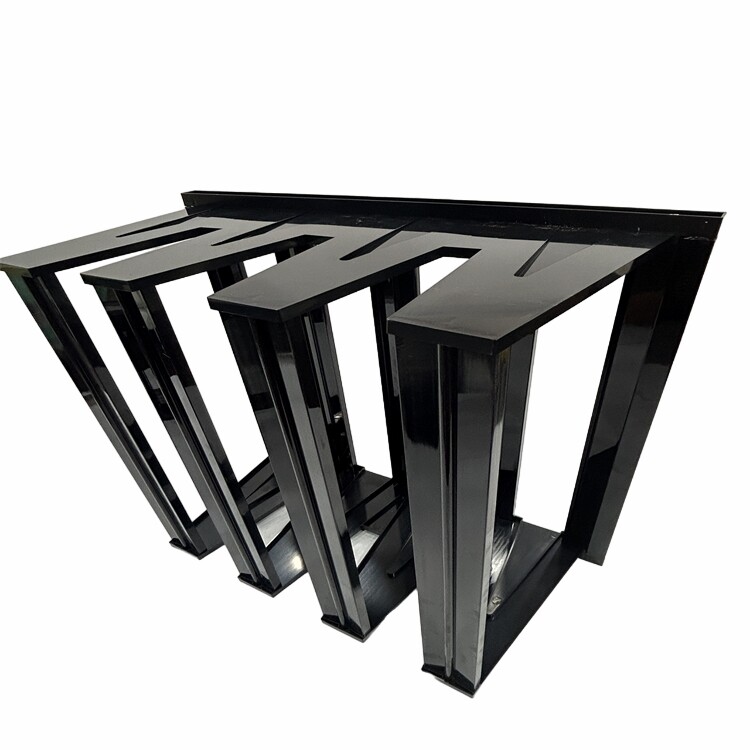
Paperboard Filter Frames
Paperboard air filter frames are used to keep HVAC filters in place. They are made of a weave that captures and absorbs particles from the air. They can be trimmed to fit any air filtration system.
The robust design, tight construction, and optimum filter clamping system of paperboard air filter frames are very useful. This will guarantee that the filter is installed correctly and easy to change. They can also be used to hold individual HVAC filters or to create filter bank configurations.
A die cutter machine may be used to make paperboard filters. A mold is made of metal with sharp edges for cutting the machine’s material. Die casting may be used on various materials to produce a perfect, precise frame every time.
Metal Filter Frames
Metal filter frames provide a semi-permanent, cleanable air filtering system that is suitable for outdoor use and includes EMI shielding. Filter frames made of metal are suited for usage in difficult areas where tough, washable, and reusable filters are required. From roll-formed channels to ultra-thin stamped sheet metal, metal filter frames are available in various shapes.
Airborne pollutants are removed from the air when these filters are placed in HVAC systems. This keeps contaminants from accumulating in the device and causing damage. When they get filthy, they may be washed and reused, saving you the time and money of having to buy additional filters.
Polyester Filter Frames
Polyester filter frames have a good reputation for being chemically resistant, abrasion-resistant, and resistant to dry heat degradation. This exceptional tolerance applies to most mineral and organic acids with the exception of high concentrations of nitric, sulfuric, and carbolic acids. At low temperatures, polyester felt also possesses high resistance to mild alkalis and poor resistance to strong alkalis. Polyester offers high resistance to most organic solvents and good resistance to most oxidizing agents. When used in HVAC equipment, polyester air filters provide a high level of dust resistance.
Flexible Filter Frames
Flexible frames are used when a rigid frame is not appropriate due to the need to bend the filter during installation. Flexible, flame-retardant polypropylene plastic frames are used in flexible air filter frames. The frames are laser-made to order, allowing for nearly any frame profile to satisfy the requirements of even the most unusual and difficult applications. Flex-Frame air filters are the best option when installation limitations necessitate a flexible filter frame or an electrically non-conductive frame.
Non-woven Filter Bag
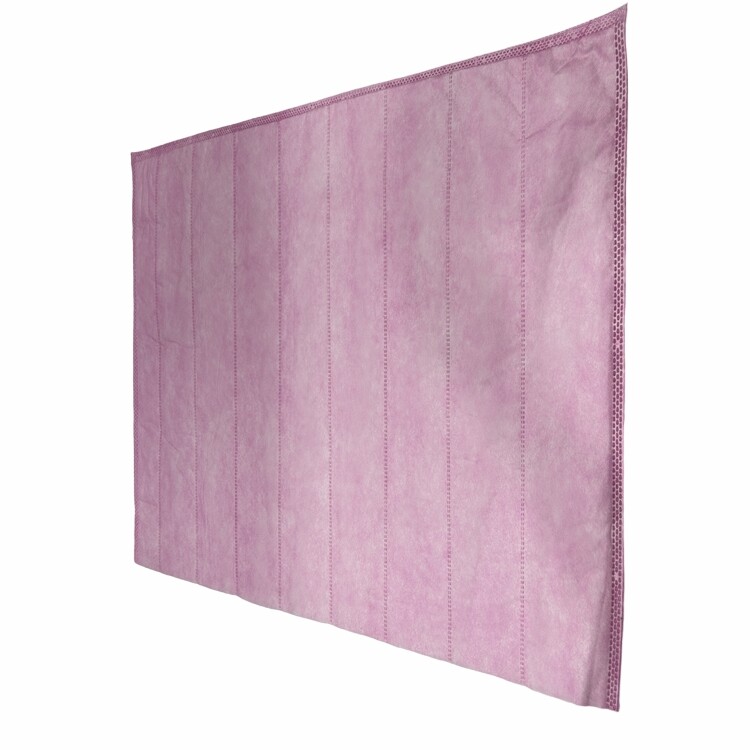
They are made from carefully selected media such as needle felt, monofilament and multi-filament. These bags are highly effective in reducing dust emission levels as per the requirement of industries.
Non-woven filter bag advantages and operating characteristics
Non-woven filter bag is a type of liquid filter bag. When it is used, its main material is selected from foreign manufacturers with the highest standards in the industry or is a special liquid filter material produced by the same manufacturer in a wholly-owned factory in China. Non-woven filter bag The strong dirt absorption capacity, large flow, high pressure.
Non-woven filter bag in the process of operation is very convenient and strong corrosion resistance, the entire product is good temperature resistance, product retention rate, low cost, wide range of applications, acid and alkali resistance, temperature 150 °C, non-woven Fabric fiber, depth filtration accuracy range is 0.5~600 μm.
Non-woven filter bag filter out the surface of the filtrate are used for its special singeing treatment, both to effectively prevent the fiber from contaminating the filtrate, but also to avoid the traditional roller pressure caused by excessive blocking of the filter hole and shorten the life of the liquid filter bag. All raw materials are white, without any special bleaching treatment, in full compliance with environmental standards.
The non-woven filter bag is also due to the three-dimensional filter layer of the needle felt, so that when the liquid flows through the needle felt, the particles are retained on the inner wall surface and deep layer of the liquid filter bag due to the deep filtration mechanism, and have high trapping of solid or colloidal particles. effectiveness.
The non-woven filter bag has a uniform thickness, stable opening rate, and sufficient strength to make the liquid filter bag stable in efficiency and longer in use. The method of connecting the bottom, side and collar of the liquid filter bag is welded by hot melt method. The problem of by-pass leakage due to pinholes and non-uniform material and the problem of fiber shedding in traditional seam liquid filter bags are all covered by this Hot melt welding liquid filter bag solution.
Non-woven filter bag High-precision wireless seam liquid filter bag adopts digital co-position multi-point welding equipment to ensure that each point of welding is kept the most solid and consistent. Ensure that the liquid filter bags are not affected by other production materials and ensure the consistency of the material of each liquid filter bag. Suitable for use in higher demanding industries.
Types of non-woven and woven filter bags
Needle-Felt Filter Bags
Needle-felt filter bags are made of densely-woven synthetic fibres and are highly durable and capable of handling heavy loads of debris. However, they are unsuitable for applications involving moisture exposure, as their performance is significantly reduced. They are a great choice for applications where maximum efficiency and long-term durability are required.
Multifilament Mesh Bags
Multifilament mesh filter bags are an economical option for filtering applications. They are made of multiple fibres, usually synthetic, woven together to create a bag. They can handle moderate temperatures and provide effective filtration but are not ideal for fine filtration due to poor particle retention. They are often used for industrial applications requiring a low-cost filter bag.
Monofilament Mesh Bags
Monofilament mesh bags provide excellent particle retention down to the micron level, making them ideal for applications requiring the highest filtration level. While they come with a higher cost than multifilament mesh, their temperature range is not as limited. Monofilament mesh bags are a great choice for applications that need to filter out small particles but don’t require the highest temperature tolerance level. Because of their higher cost and limited temperature range, monofilament mesh bags may not be the best choice for all applications.
Synthetic Fiber Filter Bags
Synthetic fibre filter bags are designed for high-efficiency filtration with excellent temperature resistance. These bags have a finer weave and a much smaller pore size than other filter bags, allowing them to capture particles as small as one micron. These bags are highly durable and ideal for applications requiring a higher level of filtration while still offering a low-cost option. Synthetic fibre filter bags can also handle heavier loads than mesh bags, making them a great choice for heavier debris applications.
Mesh Filter Bags
Mesh filter bags are a type of filter bag that is made of a woven material, typically made of nylon or polyester. These bags are particularly useful in filtration applications due to their large surface area, which allows for higher flow rates. They are also highly efficient, capturing and removing contaminants from liquids or air. Mesh filter bags are often used in applications where particle retention is not a major concern, as the material can be easily torn or ripped.
Differentiating Factors
When choosing the right filter bag for a particular application, there are a few key factors to consider. Cost is obvious, as certain filter bags may be more expensive than others. Efficiency is another important factor, as the filter bag must perform the desired filtration task. Additionally, particle retention is an important factor to consider, as some filter bags can better filter particles of certain sizes. Finally, the temperature range of the filter bag is an important factor, as each filter bag is designed with a certain temperature range in mind. By considering these differentiating factors, you can ensure that you choose the right filter bag for your specific application.
Material of Non-woven Filter Bag
Polyester stands out as one of the most durable and robust fabrics, composed entirely of virgin polyester filaments. Its versatility makes it suitable for a wide range of applications, such as medical facilities, construction sites, cement plants, power plants, and aluminum facilities. Polyester is well-suited for temperatures ranging from 140-150 degrees Celsius, and various treatment options are available to enhance its properties, including antistatic treatment, oil and water-repellent coating, flame retardancy, and PTFE finishing.
Homopolymer is preferred in ceramic and aluminum plants, particularly in moist environments, serving as an excellent alternative to polyester when hydrolysis is a concern. Blends of acrylic and polyester are also available. Homopolymer performs well within temperatures of up to 125 degrees Celsius, with various treatment options to tailor its characteristics to specific needs, such as antistatic treatment, oil and water repellent coating, flame retardancy, and PTFE finishing.
Meta-aramid is a flame-resistant, high-temperature fabric that boasts excellent resistance to ignition and a wide range of chemicals, making it suitable for modern industrial applications. It thrives in high-temperature settings, withstanding temperatures of 200-220 degrees Celsius. This fabric exhibits outstanding chemical resistance to organic solvents and hydrocarbons and offers high tensile strength. However, it may have a reduced lifespan when exposed to sulfur dioxide or sulfur trioxide. Various treatment options are available to further enhance its properties, including antistatic treatment, oil and water-repellent coating, flame retardancy, and PTFE finishing.
Polyphenylene sulfide, commonly known as Ryton or PPS, is highly resistant to acids, alkalis, and organic solvents, and offers flame and hydrolysis resistance. This fabric is suitable for industries where environmental conditions fluctuate. PPS boasts high tensile strength and mechanical stability, withstanding temperatures of up to 190-200 degrees Celsius. Similar to other fabrics, PPS can undergo various treatments, such as antistatic treatment, oil and water-repellent coating, flame retardancy, and PTFE finishing.
Learn About Common Filter Bag Finishes
Calendaring (Glazing)
Calendaring, also known as Glazing, is the high-pressure pressing of the fabric by rollers to flatten or smooth the material. Calendering pushes the surface fibers down onto the body of the filter medium. Calendering can be applied to various media such as polyester, polypropylene, and aramid. This is done to increase and uniform surface life, improve stability and reduce shrinkage.
Napping
This process is the scraping of the filter surface across metal points or burrs on a revolving cylinder. Napping raises the surface fibers, creating a "fuzz", that provides a large number of sites for particle collection by interception and diffusion. Fabrics used for collecting sticky or oily dusts are sometimes napped so they can provide better collection and an easier cleaning process.
Singeing
Singeing is done by passing the filter material over an open flame. This removes any straggly surface fibers and results in a more uniform filter bag surface. You can typically see this process done on the following fabrics; polyester, polypropylene, acrylic, aramid, ryton, and P84 felts.
Coating
Also known as resin treating, this involves immersing the filter media in natural or synthetic resin. This process helps lubricate the woven fibers, provides high-temperature durability, and various fabrics.
Suzhou Huazhijie Purification Technology Co., Ltd., formerly Changshu Keling Filter Material Co., Ltd., was founded in 2012 and is now located in Buildings 7 and 8, No. 80, Wangxian Road, Dongbang Town, Changshu City, Suzhou.

FAQ
As one of the leading filter part manufacturers and suppliers in China, we warmly welcome you to wholesale discount filter part made in China here and get quotation from our factory. All our products are with high quality and competitive price.
filter