

Hepa Filter


The company's technical strength, sophisticated equipment and service-oriented can provide you with high-quality products, services and perfect solutions in the high-efficiency air purification industry!
Why Choose Us
Quality Assurance
In terms of quality assurance, the company strictly follows the standards and norms of the industry quality system. Adopt industry-leading testing equipment to ensure product quality and good reputation
Professional Service
We can accept factory inspection and goods inspection at any time. Technical discussion, research and development of new products, and complete after-sales service.
Attractive Design
Our design team will design patterns based on the latest fashion trends. We also collaborate with cutting-edge design companies to regularly launch new products.
One stop solution
From the begining inquiry and throughout the entire process until you receive the goods. we are dedicated to supporting you every step of the way.
HEPA is a type of pleated mechanical air filter. It is an acronym for "high efficiency particulate air [filter]" (as officially defined by the U.S. Dept. of Energy). This type of air filter can theoretically remove at least 99.97% of dust, pollen, mold, bacteria, and any airborne particles with a size of 0.3 microns (µm). The diameter specification of 0.3 microns corresponds to the worst case; the most penetrating particle size (MPPS). Particles that are larger or smaller are trapped with even higher efficiency. Using the worst case particle size results in the worst case efficiency rating (i.e. 99.97% or better for all particle sizes).
No By products Produced or Emitted: Air purification technologies such as PECO, ozone, and ionizers all produce and emit a hazardous by product into the air when they are utilized in an environment. However, HEPA does not produce any by products or ozone like competitors.
Effective Particulate Removal
HEPA filtration is capable of capturing particulate matter as small as 0.3 microns in size, with a 99.97% effectiveness.
Ideal for Allergy Sufferers
HEPA filters contain the ability to remove most airborne particles from your home or office that may contribute to your adverse allergy reactions.
Long Filter Life
The lifespan of a HEPA usually lasts for about 2 to 3 years. In comparison to other competitors, such as Carbon, these filters stay longer.
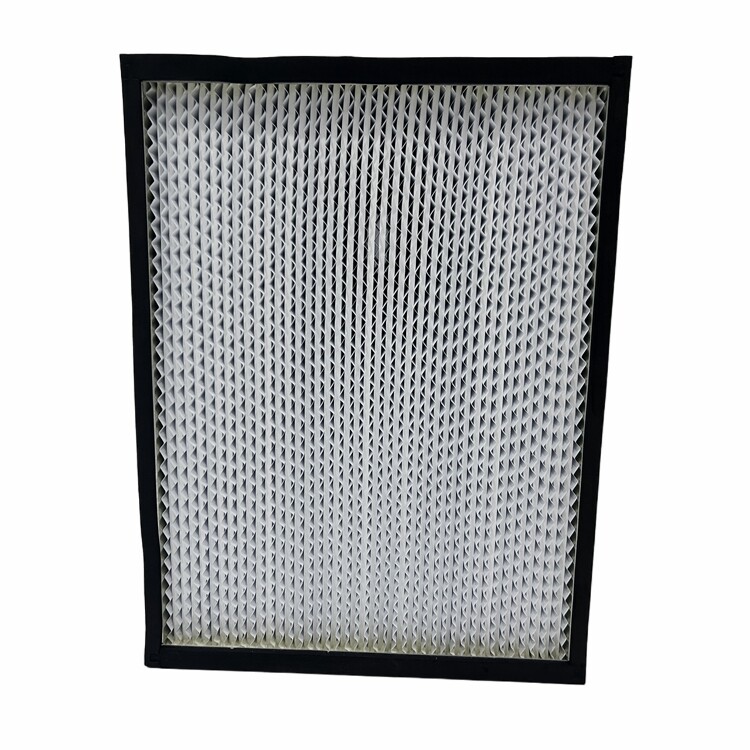
Since most Americans spend the majority of their time indoors, going from home to work or school, inside their vehicles, they are exposed regularly to air that is up to five times more polluted than the air outside. Given this information, indoor air quality is of great concern in homes, as well as businesses, restaurants, schools, and more.
One of the most effective methods of improving air quality inside is the use of HEPA filtration. HEPA or High-efficiency particulate air filters are pleated air filters designed to remove contaminants from the air. Theoretically, HEPA filters remove 99.97 percent of particles measuring 0.3 microns, including airborne contaminants like mold, bacteria, viruses, pollen, and dust.
HEPA filters are high performance, enhancing air quality in homes for family and friends, in businesses for customers, employees, and visitors, and in schools for students, teachers, and faculty, just to name a few.this improved air quality means not only enhanced health benefits but can also help businesses meet air quality standards as well as earn LEED certification.
True HEPA vs. HEPA Filters
HEPA filters are the most commonly used filtration technology in both commercial and residential settings. It is partly due to its effectiveness at capturing 99.97% of particles 0.3 microns and is efficient in commercial and residential spaces.
A True HEPA filtration device or filter is the only type of HEPA filter that truly conforms to the DOE standard for HEPA filtration, has the highest efficiency, and hits the 99.97% threshold.
If the HEPA filter does not meet the DOE's standards for HEPA filtration, then it is not considered True HEPA. While the filter could perhaps still capture particles sized 0.3 microns and capture a high percentage of them, unless confirmed a True HEPA, it cannot claim to meet the DOE HEPA standards.
When purchasing a True HEPA, you should be able to source third-party testing that also proves the brand went through the proper steps to adhere to the DOE's HEPA standards and test its efficiency.
Some of the types of particles that a True HEPA filter can capture
Inertia works on large, heavy particles suspended in the flow stream. These particles are heavier than the fluid surrounding them. As the fluid changes direction to enter the fibre space, the particle continues in a straight line and collides with the media fibres where it is trapped and held.
Direct interception works on particles in the mid-range size that are not quite large enough to have inertia and not small enough to diffuse within the flow stream. These mid-sized particles follow the flow stream as it bends through the fibre spaces. Particles are intercepted or captured when they touch a fibre.
Diffusion works on the smallest particles. Small particles are not held in place by the viscous fluid (air) and diffuse within the flow stream. This means that the smaller a particle is, the more likely it is to traverse the flow stream, making it more likely to collide with the fibre and be collected.
Sieving, the most common mechanism in filtration, occurs when the particle is too large to fit between the fibre spaces.
HEPA filters can intercept particles using four different filtration mechanisms
Inertial impaction
The fibres of the filter pick up particles and droplets that are large enough, notably those larger than 1μm.
These larger air particles embed directly into the fibres of the filter.
Direct interception
The Van der Waals force, otherwise known as the intermolecular force of attraction, intercepts particles and droplets larger than 0.1 μm.
These particles pass through the filter as they are sucked in by the air purifier and stick to the filter’s fibres.
Brownian diffusion
Particles of a size of less than 0.1 μm (like aerosols), some of the smallest known particles, have a so-called Brownian trajectory (a random movement pattern).
This makes them easy to capture via the Van der Waals force when they strike against the fibres of the filter.
In a HEPA filter, when the molecules that are smaller than 0.1 micron in size collide with each other, they are slowed down.
Brownian diffusion further lengthens the time molecules take to pass through the filter, thus increasing their chances of being captured.
Electrostatic forces
These are attraction forces that draw viral aerosols to the filter fibres where they are then captured via the previous mechanisms.
There's no straightforward answer. the life expectancy of your filter depends on the nature of lab experiments, the hours of cabinet operation, and the lab's cleaning procedures.
When kept in optimum conditions, you can expect your filter to operate efficiently for between 5 to 10 years – but they need to be looked after. Care and maintenance begin with the cabinet assembly, and by ensuring that biosafety cabinet fans and exhaust systems are sufficient.
As filters do their job, they gather particles and therefore become less efficient. Class II Type A biosafety cabinets have been designed to accommodate this and, alongside balancing dampers, their internal fans will compensate for the filter becoming less effective. Design standards have been put in place to ensure that biosafety cabinet fans and exhausts work in tandem with HEPA filters so that clean air is always in circulation.
Make sure that you know which type of cabinet you're purchasing, and whether or not it will meet the requirements you're looking for.
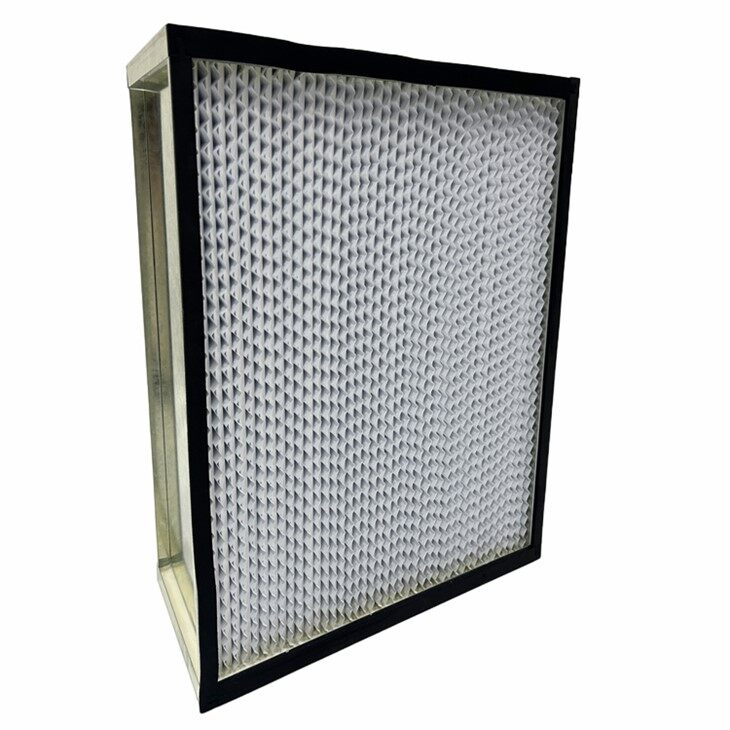
Can You Clean a HEPA Filter Yourself
Some online guides claim you can prolong the life of your HEPA filters by cleaning them yourself. They advise rinsing filters in cold water, using a vacuum or an air blower to remove the dust, or even banging the filter to remove clogs of particles.
Unless the manufacturer explicitly recommends it, you should avoid cleaning HEPA filters yourself. This is because HEPA filters are generally made from delicate materials, so any type of cleaning could easily damage them.
If the manufacturer does say you can clean your HEPA filter, follow their guidelines to the letter to avoid damaging the filter.
Tips for Extending the Life of Your HEPA Filter
Pre-Filter Use
Utilize Pre-Filters: Many air purifiers come with pre-filters that capture larger particles before they reach the HEPA filter. Regularly cleaning or replacing these pre-filters can significantly reduce the load on the HEPA filter, allowing it to focus on smaller particles and extending its useful life.
Proper Installation
Ensure Correct Installation: Incorrectly installed HEPA filters can allow air to bypass the filter, reducing its effectiveness and potentially shortening its lifespan. Always follow the manufacturer's instructions for installation to ensure a proper fit and seal.
Optimal Operation
Maintain Optimal Operation Conditions: Running your air purifier on a lower speed setting can reduce the amount of air and particles passing through the filter, potentially extending its life. However, ensure the air purifier is still effective at cleaning the air in your space by adjusting settings according to your specific needs and conditions.
Regular Inspections
Inspect and Vacuum Regularly: Periodically inspect your HEPA filter for signs of heavy particle accumulation. Gently vacuuming the surface of the HEPA filter with a soft brush attachment can remove larger debris and extend the filter's life. Be careful not to damage the filter fibers, as this can decrease its efficiency.
Avoid High Humidity and Moisture
Protect from Moisture: HEPA filters can be damaged by excessive moisture, which can lead to mold growth within the fibers. Use dehumidifiers in damp areas and avoid placing air purifiers in locations where they will be exposed to steam or water vapor.
Timely Replacement of Pre-Filters
Replace Pre-Filters as Needed: Keep an eye on the condition of any pre-filters or carbon filters in your system. Replacing these according to the manufacturer's schedule can prevent the HEPA filter from becoming overloaded with particles that could have been caught earlier in the filtration process.
Smoke, Chemicals, and Heavy Dust Avoidance
Minimize Exposure to Heavy Pollutants: Try to reduce the air purifier's exposure to environments with heavy smoke, chemical vapors, or excessive dust. These conditions can clog the filter more quickly. For instance, avoid smoking indoors or using the air purifier near ongoing construction without additional air quality controls in place.
Adequate Ventilation
Ensure Good Ventilation: Good ventilation can reduce the concentration of particles in the air, thereby reducing the load on your HEPA filter. Whenever possible, open windows to allow fresh air to circulate and dilute indoor pollutants.
Suzhou Huazhijie Purification Technology Co., Ltd., formerly Changshu Keling Filter Material Co., Ltd., was founded in 2012 and is now located in Buildings 7 and 8, No. 80, Wangxian Road, Dongbang Town, Changshu City, Suzhou.

FAQ
As one of the leading hepa filter manufacturers and suppliers in China, we warmly welcome you to wholesale discount hepa filter made in China here and get quotation from our factory. All our products are with high quality and competitive price.
mini pleated hepa filter, clean bench hepa filter