

Bag Filter
The company's technical strength, sophisticated equipment and service-oriented can provide you with high-quality products, services and perfect solutions in the high-efficiency air purification industry!
Why Choose Us
Quality Assurance
In terms of quality assurance, the company strictly follows the standards and norms of the industry quality system. Adopt industry-leading testing equipment to ensure product quality and good reputation
Professional Service
We can accept factory inspection and goods inspection at any time. Technical discussion, research and development of new products, and complete after-sales service.
Attractive Design
Our design team will design patterns based on the latest fashion trends. We also collaborate with cutting-edge design companies to regularly launch new products.
One stop solution
From the begining inquiry and throughout the entire process until you receive the goods. we are dedicated to supporting you every step of the way.
What is Bag Filter
A bag filter is a filtration type dust collector that mainly collects dust or solid particles from exhaust gas in industrial processes. By selecting suitable filter (filter bag), it is applicable to various exhaust gases with a wide range of temperatures and compositions.
Benefits of Bag Filter
High filtration efficiency: Bag filter housing can effectively filter dust, smoke, particulates and other pollutants in the air and water and their filtration efficiency can generally reach up to 99%.
Large capacity: The capacity of bag filter housing is larger than other types of air filtration equipment, so it is suitable for applications that require large amounts of filtration, such as factories, workshops, etc.
Simple maintenance: The maintenance of bag filter housing is relatively simple, and it is convenient to replace the filter bag.
Wide range of application: Bag filter housing can filter many types of air pollutants, so they have a wide range of application.
How the bag filter works
Inlet of Gas Stream: The gas stream containing particles and contaminants enters the bag filter system.
Filter Housing: The filter housing is a chamber that contains a series of fabric bags. These bags are made from materials such as woven or felted fabric with varying degrees of porosity, allowing them to capture particles of different sizes.
Filtration Process: As the gas stream flows into the filter housing, its velocity decreases due to the larger space available. This reduction in velocity causes the particles carried by the gas to lose their kinetic energy. As a result, the particles start to settle and are unable to maintain their suspension in the gas.
Particle Capture: The fabric bags within the housing act as the primary filtration medium. The bags are strategically placed in such a way that the gas must pass through them. As the gas flows through the bags, the particles are intercepted by the fabric’s surface due to various mechanisms such as direct impaction, interception, and diffusion.
Pressure Differential: As the layer of captured particles builds up, it creates a pressure differential between the gas inside the bags and the gas outside the bags. This pressure differential, also known as the pressure drop, is a crucial parameter indicating the performance and efficiency of the bag filter.
Cleaning Mechanism (Pulse Jet Cleaning): To maintain the efficiency of the filtration process and to prevent excessive pressure drop, the accumulated particles must be periodically removed from the bags. One common cleaning method is the pulse jet cleaning system. This system involves the use of compressed air directed into the bags in a controlled manner. The sudden release of compressed air creates a shockwave that causes the fabric to flex and vibrate. This action dislodges and releases the accumulated particles from the fabric’s surface, allowing them to fall into a collection hopper at the bottom of the housing.
Particle Disposal: The collected particles are then disposed of properly, often as waste material.
Continuous Operation: The bag filter system operates continuously, with the filtration, accumulation, and cleaning cycles repeating as needed based on factors such as the type of particles being filtered, the gas flow rate, and the desired filtration efficiency.
(1) Upper intake type and lower intake type
The upper air inlet type means that the dust-containing air flow inlet is located in the upper part of the bag room, and the air flow is in the same direction as the settlement of the dust.
The downwind wind type is where the dust-laden airflow inlet is located in the lower part of the bag room, and the direction of the airflow and the dust fall are opposite.
If the outside view is under the air, but the bag room is equipped with a deflector to introduce the dust-containing airflow into the upper part of the bag room. It should belong to the upper air type.
(2) Round filter and flat filter
Circular filter means that the filter bag is cylindrical.
The flat filter type refers to a trapezoidal, wedge-shaped and non-cylindrical shape of the filter bag in the form of a flat plate (envelope).
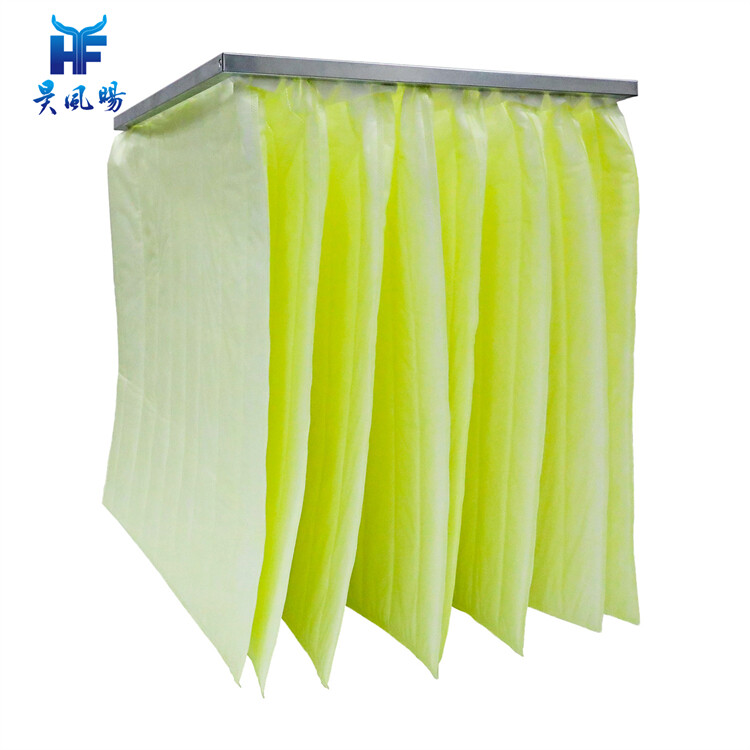
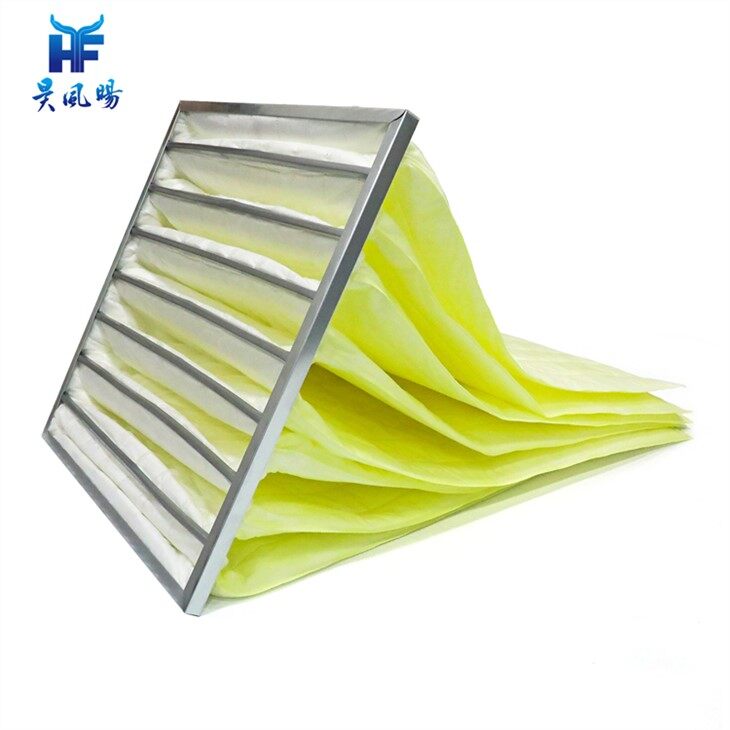
(3) Suction type and press-in type
Inhalation means that the fan is located behind a bag filter and the bag filter is operated under negative pressure.
Press-in type means that the fan is located before the bag filter and the bag filter is working under positive pressure.
(4) Inlet and Outer Filters
The inner filter type refers to the dust-containing air flow from the bag to the outside of the bag, and the dust is collected on the inner side of the filter bag.
1. Dusty Gas Temperature
The temperature of dusty gas is the main basis for the selection of bag filters. When the gas temperature is too high, the filter bag will burn out and deform. For high temperature gas, it must be cooled to below the temperature that the filter material can bear; if the gas temperature is too low, dew will occur, so the gas temperature must be kept above 20℃( dew point).
2. Inlet Dust Concentration
The concentration of inlet dust is determined by the production process tech of the dust raising point. In the model selection, it is an important factor next to the treatment air volume. When the dust concentration at the inlet is too high, pre dedusting equipment shall be added.
3. Outlet Dust Concentration
The outlet dust concentration refers to the emission concentration of the bag filter, which is the same as the expression of the inlet dust concentration, outlet dust concentration is mainly determined by the local environmental protection emission requirements and user requirements. The concentration of tail gas after purification by the bag dust collector can generally reach 50g/Nm³.
4. Treatment Air Volume
The treatment air volume refers to the volume of the gas that can be purified by the deduster in a unit time. The unit is m ³/ h or Nm ³/ h. Treatment air volume is one of the main bases for the selection of bag filters.
5. Pressure loss
Pressure loss refers to the pressure drop, or resistance, of gas from the inlet to the outlet of the deduster.
6. Operating Pressure
The operating pressure of the bag filter is determined according to the static pressure value of the micro fan before and after the bag filter and its installation position, and it is also the design pressure value of the bag filter.
7. Filtration Speed (air-cloth ratio)
Filtration speed is defined as the speed at which the filter gas passes through the filter media, or the ratio of the air volume through the filter media to the area of the filter media. Filtration speed is the key factor in the selection of dust collector, which should be determined according to the properties of smoke or dust, application, dust particle size, viscosity, gas temperature, water content, dust concentration and different filter bag materials.
Tips for Maintaining Bag Filters
For a bag filter to properly serve its purpose, it needs to be maintained regularly. Maintaining bag filters is critical to ensure the longevity and optimal performance of your filtration system. Here are some tips for maintaining bag filters:
Check the pressure gauge regularly to monitor filter performance. As your bag filters become clogged with particles, differential pressure increases, which can lead to reduced flow rates and decreased filtration efficiency.
Inspect the filter housing for leaks, cracks, or other damage.
Clean the filter housing and bags periodically. Over time, debris and particles can accumulate inside the housing, reducing the efficiency of your filtration system. Cleaning can remove accumulated debris and extend the life of the bags.
Replace filters when they reach their maximum capacity or become clogged. Failure to replace filters can lead to reduced flow rates, decreased filtration efficiency, and even damage to your filtration system.
Make sure to select the right bag filter that can handle the flow rate and particle load of your specific application.
O-rings are responsible for creating a tight seal between the housing and the filter. Over time, O-rings can become worn or damaged, leading to leaks and reduced filtration efficiency. Inspecting O-rings and replacing them as needed can help ensure the optimal performance of your filtration system.
Properly train personnel on how to properly maintain your filtration system. This includes changing filters, monitoring differential pressure, cleaning the housing, and inspecting O-rings.
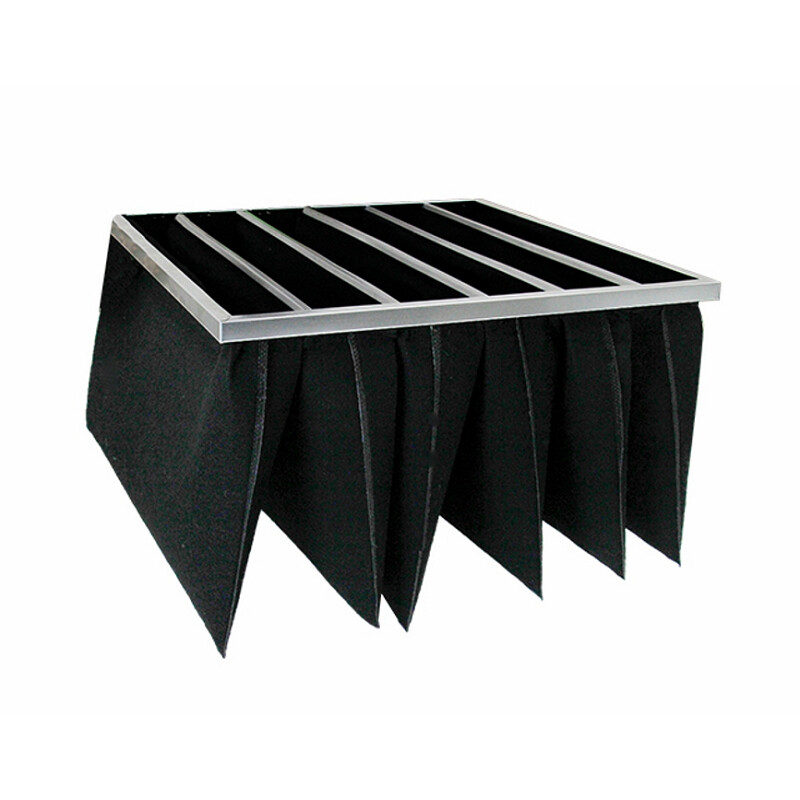
Pleated Filter vs Bag Filter Comparison
|
Feature/Aspect |
Pleated Filter |
Bag Filter |
|
Particle Sizes |
0.5-50 microns |
0.1-10 microns |
|
Filtration Efficiency |
High (up to 98% for micron-sized particles) |
Moderate (around 95% for micron-sized particles) |
|
Airflow |
Superior due to increased surface area |
Good, but might be prone to clogging |
|
Durability |
Good, but might be susceptible in high abrasion environments |
Excellent, especially with cuff design |
|
Lifespan |
Moderate to Long, depending on the environment |
Long, proven by brands like Aeropulse |
|
Maintenance Frequency |
Less frequent |
Regular |
|
Maintenance Ease |
Moderate (due to pleats) |
Easy |
|
Replacement Ease |
Moderate |
Easy, especially with standard dust filter bags |
3 Reasons to Replace Your Dust Collector Filter Bags
The Filter is Damaged.
A damaged filter is not much use to anyone. The dust completely bypasses the filter, clogging other areas of your equipment and increasing the hazards your filter would otherwise help you avoid. A baghouse filter bag is also supposed to help stabilize the pressure within your equipment, and when it is damaged, it cannot perform this vital function.
Damaged filters are not always easy to spot. Some equipment has a broken bag indicator, but not every system has this type of feature. Instead, you may need to monitor internal pressure closely. A rapid pressure drop is a clear indicator of a damaged filter. Moisture, high heat, and simple wear and tear can all result in a damaged filter. Damaged cages and over pulsing can also cause filter damage.
The Filter Has Reached the End of Its Life: Filter Blinding.
Filter blinding occurs when the filter has simply reached the end of its useful life. This is the most common reason that you will need to change out your baghouse filter bags. Eventually, a filter bag will become overloaded with dust, even if you keep up with the recommended periodic cleaning cycles. Once these cycles do not effectively clean the filter bag, it is time to replace the filter bag.
Every filter bag is different when it comes to usable life. The lifespan of the filter bag will also vary based on the material you are using, the moisture and chemical makeup of the gas stream from the equipment, operating conditions, and a lot more. It is always a good idea to consult with a specialist about how long you can expect your filter bag to last and change it out once it reaches the end of its useful life.
The Filter Is Not the Right Size, Fit, or the Filter Media is Incorrect.
You should replace your bag filters if you realize that you have used the incorrect filter or filter media for the specific type of material/dust that you are filtering. Many people make the mistake of using any filter that seems to work (and making filter decisions based on cost rather than purpose). As soon as you realize that the filter is not suitable for the project, it needs to be replaced.
Having an incorrect filter is sometimes just as bad as having no filter at all or a filter that is beyond its useful life. An incorrect filter is a hazard — it creates more dust and increases the risk of fires and explosions. In some cases, it might not have the right chemical rating for the application, making these hazards even more likely.
Suzhou Huazhijie Purification Technology Co., Ltd., formerly Changshu Keling Filter Material Co., Ltd., was founded in 2012 and is now located in Buildings 7 and 8, No. 80, Wangxian Road, Dongbang Town, Changshu City, Suzhou.

FAQ
As one of the leading bag filter manufacturers and suppliers in China, we warmly welcome you to wholesale discount bag filter made in China here and get quotation from our factory. All our products are with high quality and competitive price.
activated carbon bag, micron filter bags, activated carbon bag filter