

Although the framework does not directly determine the air filter's efficiency like filter materials, it plays a crucial role in the structural strength, sealing performance, installation method, and service life of the filter.So what are the frames of air filters and how should they be selected?
Classified by materials:
1.Paper frame/fiberboard frame

Description: Most commonly seen in primary and medium efficiency filters, made of thick cardboard or composite fiberboard.
Advantages:
- Low cost: Economical and commonly used for disposable filters.
- Lightweight: Lightweight, easy to install and replace.
Disadvantages:
- Not moisture resistant: prone to deformation and softening in humid environments, leading to structural damage or sealing failure.
- Limited strength: Not suitable for high air volume or high static pressure applications.
Applicable scenarios: Home air purifiers, initial filtration of commercial HVAC systems, cost sensitive applications.
2.metal frame
Description: It is mainly made of aluminum alloy, galvanized steel plate or stainless steel, and is the mainstream choice for high-efficiency filters.
Advantages:
- High strength: able to withstand high wind and static pressure, without deformation, structurally stable.
- Good durability: The metal material is sturdy and can be used for multiple disassembly and assembly occasions (although the filter element is usually still disposable).
- Moisture and fire resistance: not affected by humidity and has fire resistance characteristics.
- Good sealing: easy to bond with sealing strips (such as polyurethane foam adhesive) to ensure no leakage.
Disadvantages:
- High cost: more expensive than paper frames.
- Heavy weight: installation and handling are slightly inconvenient.
Applicable scenarios:
Aluminum alloy: high-efficiency (HEPA)/ultra high efficiency (ULPA) filters for clean rooms, hospital operating rooms, data centers, and high-volume ventilation systems.Galvanized steel: Medium efficiency filters for industrial environments and large commercial HVAC units.Stainless steel: Special environments with extremely high requirements for corrosion prevention and hygiene, such as food processing, pharmaceuticals, and biosafety laboratories.
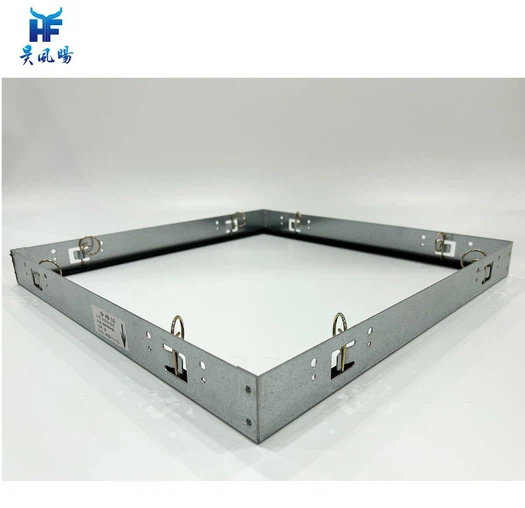
3.plastic frame

Description: Injection molded from engineering plastics such as ABS and PP.
Advantages:
- Moisture and corrosion resistance: Excellent corrosion resistance, able to cope with high humidity or certain chemical environments.
- Lightweight: lighter than metal and easy to handle.
- Strong customizability: easy to manufacture complex structures, such as handle or buckle designs.
Disadvantages:
- Poor temperature resistance: inferior to metal, may deform at high temperatures.
- Moderate strength: not as sturdy as metal frames.
Applicable scenarios: household/car air purifiers, special chemical environments, humid indoor swimming pools, etc.
When choosing a framework, multiple factors need to be considered comprehensively, including:
-
Application scenarios and environmental conditions
Cleanrooms, hospitals, laboratories: HEPA/ULPA filters with metal frames (preferably aluminum alloy or stainless steel) must be selected to ensure structural stability and absolute sealing, meeting strict cleanliness standards.
Ordinary commercial buildings and hotels: Paper frames can be used for primary filters, while galvanized steel or aluminum alloy frames are recommended for medium and high-efficiency filters.
Household: Paper or plastic frames are sufficient to meet the needs, with priority given to cost and portability.
High humidity environments (such as swimming pools, seafood markets): Avoid paper frames and choose plastic or metal frames.
Corrosive environment (chemical plant, laboratory exhaust): Choose stainless steel frame or special plastic frame.
-
Filter efficiency level
Primary filter: mostly made of paper or galvanized steel frame.
Medium efficiency filter: paper, galvanized steel or composite frame.
High efficiency/ultra high efficiency filters: Almost all are made of aluminum alloy frames, with very few using stainless steel.
Airflow and static pressure
When the system air volume is high and the static pressure is high, the pressure borne by the filter is also high. High strength metal frames must be selected to prevent deformation and seal failure. For systems with low air volume and low pressure loss, an economical framework can be chosen.
-
Installation method
Bag filter: usually supported by metal or plastic rings.
Plate filters: mostly made of paper or metal frames, fixed by pressure plates or magnets.
High efficiency filters with or without partitions: usually equipped with flange edges, installed in specialized slots, and sealed with sealant. It is necessary to confirm whether the size of the frame flange matches the installation unit.
-
cost budget
Weigh the initial investment while meeting performance requirements. Paper frames are the most economical, while metal frames require the highest investment but have the longest lifespan (referring to the frame itself, and the filter still needs to be replaced regularly).
-
Regulations and Standards
Some industries, such as pharmaceuticals and food, have strict regulations and standards (such as GMP, FDA) that may mandate the use of frames made of specific materials such as stainless steel to meet hygiene and anti-corrosion requirements.